The Wider Curriculum
Oracy
At The Federation of Netley Abbey Infant and Junior Schools, we believe that talk is a powerful tool for learning. Developing children's oracy skills helps them to become confident communicators, articulate their thinking and build strong, positive relationships with others. Our approach is informed by the principles of Voice 21, recognising that high-quality classroom talk is essential for both academic success and personal development.
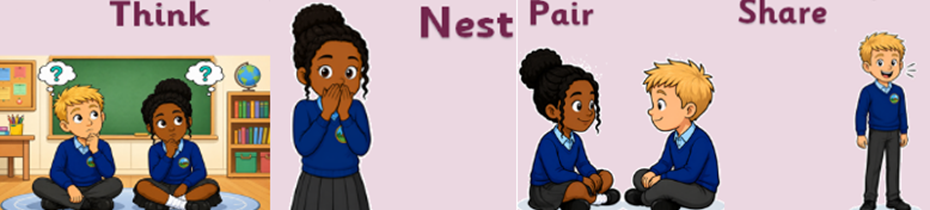
Across the curriculum, we use our Think, Nest, Pair, Share approach to provide structured opportunities for high-quality discussion. Children are first given time to think independently, rehearse their answer in their nest, discuss ideas with a partner and share their thoughts with the wider class.
This approach encourages every child to participate, listen carefully, build on the ideas of others and develop the confidence to express their own views. By placing purposeful talk at the heart of learning, we help children deepen their understanding, extend their vocabulary and become thoughtful, respectful and effective communicators.
Science
Science helps children to make sense of the world around them. We nurture curiosity and a love of learning by encouraging children to ask questions and follow a line of enquiry to investigate and explore scientific ideas. Through practical investigations and hands-on experiences, children learn how science works, developing the skills to observe, predict, test, record and explain. They also gain an understanding of how scientific knowledge is used in everyday life and the important role science plays in shaping our world, both now and in the future.
Our science curriculum is based on Hampshire's Science Learning Journey, which provides a carefully sequenced progression of substantive knowledge, disciplinary knowledge and scientific enquiry skills. This ensures that children build on prior learning, revisit key concepts over time and develop a deep understanding of science through meaningful, connected learning experiences.
Our science curriculum supports children to be Ready to explore, Respectful of evidence and different ideas, Safe when carrying out practical work, and Kind when collaborating with others. By developing scientific knowledge, enquiry skills and critical thinking, we empower every child to achieve Excellence Every Day.
Foundation Subjects
Our foundation subjects play a vital role in providing children with a broad, balanced and enriching education. Through subjects such as History, Geography, Art, Design Technology, Computing, Music, Physical Education, Religious Education and Personal Development Learning, children develop knowledge, skills and understanding that help them make sense of the world and their place within it. Learning is carefully sequenced to build on prior knowledge and is brought to life through enquiry, creativity, practical experiences and real-life connections.
We aim to inspire curiosity, celebrate individuality and foster a love of learning whilst helping children become Ready to learn, Respectful of others and different perspectives, Safe in their choices and actions, and Kind in their interactions and collaboration. Through our foundation curriculum, children are encouraged to think critically, solve problems, express themselves confidently and develop the knowledge, skills and values they need to thrive as lifelong learners and responsible citizens, achieving Excellence Every Day.
Personal Development Learning (PDL)
At the heart of our Personal Development Learning (PDL) curriculum is a commitment to helping every child thrive academically, socially, emotionally and morally in an ever-changing world. Rooted in our values of being Ready, Respectful, Safe and Kind, the curriculum helps children develop the confidence, resilience and self-awareness needed to succeed both in school and beyond. Through carefully planned learning experiences, pupils develop the skills to manage emotions, build positive relationships, make responsible choices and become increasingly independent learners.
Our PDL curriculum promotes pupils’ spiritual, moral, social and cultural (SMSC) development, encouraging children to reflect on their experiences, show empathy towards others and understand their responsibilities within the wider community. We celebrate diversity, value individuality and teach children about the importance of equality, inclusion and respect for all. British Values are woven throughout school life, helping pupils understand democracy, the rule of law, individual liberty, mutual respect and tolerance. Through these experiences, children develop the knowledge, skills and character needed to become active, responsible citizens who are proud of who they are and who they strive to be.
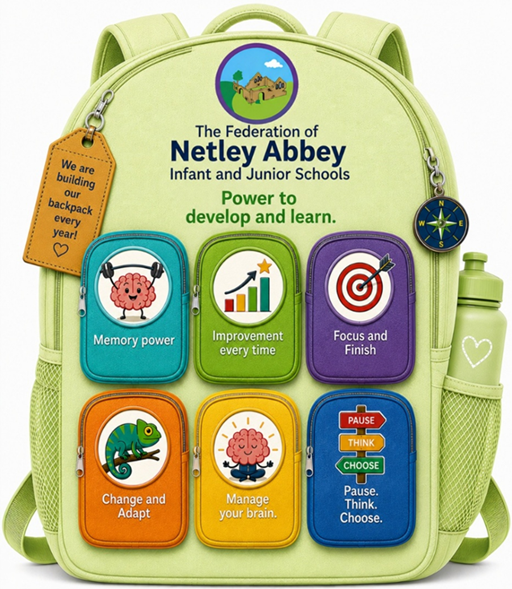
Executive functions are the skills we use to manage our thinking, behaviour and emotions so that we can learn effectively, solve problems, make decisions and achieve our goals. We explicitly teach these important skills through our child-friendly learning powers: Memory Power (remembering and using previous learning), Improvement Every Time (reflecting and learning from mistakes), Focus and Finish (sustaining attention and completing tasks), Change and Adapt (being flexible when faced with challenges or new situations), Manage Your Brain (regulating emotions, thoughts and behaviours), and Pause, Think, Choose (making thoughtful and responsible decisions). By developing these executive functioning skills, we help children become confident, resilient and independent learners who are equipped to succeed both in school and throughout their lives.
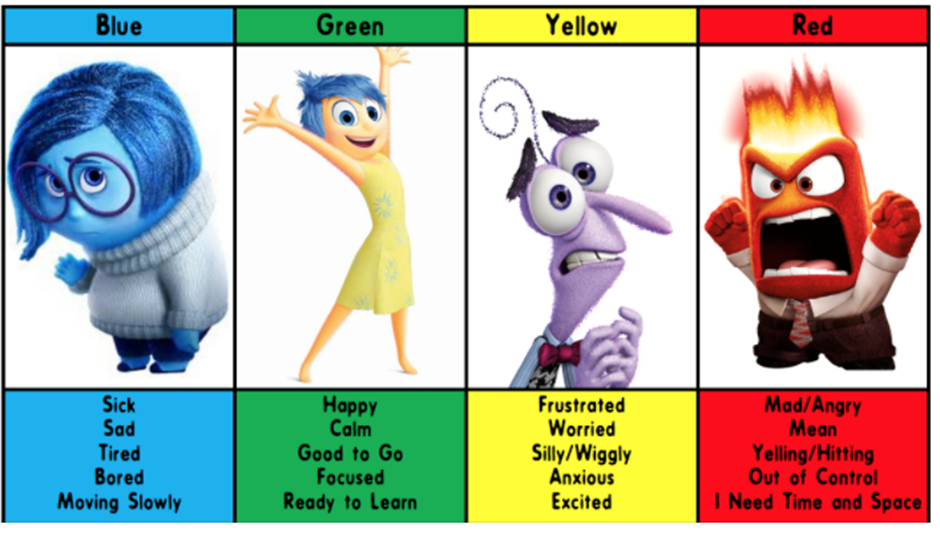
As part of our practice to support our children's personal development we use Zones of Regulation. The teaching of Zones of Regulation will help support our children in many ways. Firstly, it will provide them with the language to express their emotions clearly by using words over physical actions. Secondly, it will provide each child with a tool kit that they can use to support them when they are feeling dysregulated, for example if they are sad, anxious or angry.
We will teach the four colour zones through linking the colours to well-known characters from popular films in order to understand the four zones and what this could look like when they feel the emotions they describe.
The Green Zone - The green zone is used to describe when you are calm. Being in the green zone means you are focused, happy, or ready to learn. This is predominantly the state you want your child to be in. It’s also the state most needed in the classroom in order to learn.
The Yellow Zone - The yellow zone describes when you have a heightened sense of alertness. This isn’t always a bad thing, and you typically still have some control when you’re in the yellow zone. Being in the yellow zone means you may feel frustrated, anxious or nervous. But, it could also mean you’re feeling excited, silly, or hyper – which is okay in the right situations.
The Red Zone - The red zone describes an extremely heightened state of intense emotions. When a person reaches the red zone, they’re no longer able to control their emotions or reactions. Being in the red zone means you’re feeling anger, rage, terror, or complete devastation and feel out of control.
The Blue Zone - The blue zone, on the other hand, is used when a person is feeling low states of alertness or arousal. When you’re in the blue zone you may be feeling down – sad, sick, tired, or bored. You’re still in control, as you are in the yellow zone, but with low energy emotions.
Here are some ways that you can carry on supporting your child at home using the ‘Zones of Regulation’.
Use the ‘zones’ visual when talking about feelings and emotions.
Ask your child throughout the day, “What zone are you in?”, “How do you feel?”, “Why are you in the _____ zone?”
Model how you are feeling to them, for example, “I am feeling (yellow zone) because you’re not helping me to tidy up.”